

- Адрес:Xiamei Town, Quanzhou, Fujian, China
- Телефон:1388xx888xx
- Мобильные телефоны:1388xx888xx
- Почтовый ящик:1388xx888xx@gmail.com
Текущее местоположение: Главная страница> Информационный центр> Современные решения для беспроводной связи устройств
Современные решения для беспроводной связи устройств
Добавить время:2025-12-08
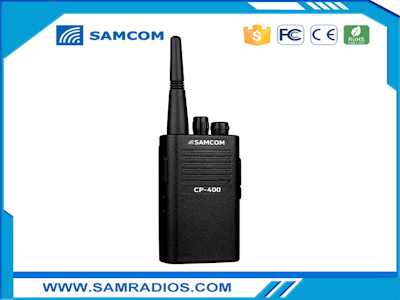
В мире, где технологии развиваются с невероятной скоростью, беспроводная связь стала неотъемлемой частью нашей повседневной жизни. От умных домов до промышленных систем, беспроводные технологии позволяют устройствам общаться друг с другом без проводов, обеспечивая удобство, эффективность и инновации. В этой статье мы подробно рассмотрим современные решения для беспроводной связи устройств, их преимущества, применение и будущие тенденции. Если вы ищете способы улучшить свой бизнес или домашнюю среду, эта статья для вас!
Введение в беспроводные технологии
Беспроводная связь существует уже несколько десятилетий, начиная с первых радиоволн и заканчивая современными высокоскоростными сетями. Сегодня мы имеем множество стандартов, таких как Wi-Fi, Bluetooth, Zigbee, Z-Wave, LoRaWAN, и cellular сети like 5G. Каждая из этих технологий предназначена для specific применений, от коротких дистанций до глобального покрытия. Например, Wi-Fi идеален для домашних и офисных сетей, в то время как 5G обеспечивает мобильную связь с низкой задержкой.
Эволюция беспроводных технологий driven потребностью в большей скорости, надежности и энергоэффективности. Ранние системы, такие как инфракрасная связь, были ограничены line-of-sight и низкой пропускной способностью. С появлением цифровых технологий, мы перешли к более sophisticated протоколам, которые могут handle большие объемы данных и поддерживать множество устройств simultaneously. Это открыло двери для Интернета вещей (IoT), где миллиарды устройств connected к интернету, собирая и обмениваясь данными в реальном времени.
Ключевые преимущества беспроводной связи включают мобильность, гибкость и масштабируемость. Пользователи могут перемещаться без потери connection, а сети легко expand при необходимости. Однако, challenges такие как interference, security risks, and power consumption remain актуальными. В следующих разделах мы углубимся в specific технологии и как они address эти issues.
Wi-Fi 6 и будущее домашних сетей
Wi-Fi 6, также known как 802.11ax, представляет собой последнее поколение Wi-Fi technology, designed to handle the growing number of devices in modern homes and offices. With features like OFDMA (Orthogonal Frequency Division Multiple Access) and MU-MIMO (Multi-User Multiple Input Multiple Output), Wi-Fi 6 offers higher speeds, lower latency, and improved efficiency compared to previous versions. For instance, it can support up to 8 devices simultaneously with minimal interference, making it ideal for smart homes with numerous IoT devices.
One of the standout benefits of Wi-Fi 6 is its ability to operate in congested environments. Traditional Wi-Fi networks often struggle when multiple devices are connected, leading to slow speeds and dropped connections. Wi-Fi 6 mitigates this by using smarter scheduling and beamforming techniques, which direct signals specifically to devices rather than broadcasting widely. This results in a more stable and faster connection, even in areas with many users, such as apartments or office buildings.
Moreover, Wi-Fi 6 is backward compatible with older devices, ensuring a smooth transition for users. It also incorporates WPA3 security protocol, providing enhanced protection against hacking attempts. For businesses, upgrading to Wi-Fi 6 can lead to increased productivity and better customer experiences, as employees and clients enjoy reliable internet access. As more devices become Wi-Fi 6 compatible, we can expect this technology to become the standard for wireless networking in the coming years.
In terms of deployment, setting up a Wi-Fi 6 network is straightforward. Users can purchase compatible routers from brands like Asus, Netgear, or TP-Link, and often, internet service providers are offering Wi-Fi 6 as part of their packages. The cost has decreased over time, making it accessible to a wider audience. For those looking to future-proof their homes or offices, investing in Wi-Fi 6 is a smart move that will pay off in terms of performance and reliability.
5G: Революция в мобильной связи
5G technology is set to transform not just mobile communications but entire industries with its high speed, low latency, and massive connectivity capabilities. Unlike previous generations, 5G operates on a range of frequency bands, including low-band, mid-band, and high-band (mmWave), each offering different trade-offs between coverage and speed. For example, mmWave provides ultra-fast speeds but over shorter distances, making it suitable for dense urban areas, while low-band offers wider coverage at lower speeds.
The applications of 5G are vast, ranging from enhanced mobile broadband to mission-critical communications in sectors like healthcare, autonomous vehicles, and smart cities. In healthcare, 5G enables real-time remote surgeries and patient monitoring, while in transportation, it supports vehicle-to-everything (V2X) communication for safer and more efficient traffic management. The low latency of 5G (as low as 1 millisecond) is crucial for these use cases, where delays could have serious consequences.
From a consumer perspective, 5G means faster download and upload speeds, smoother streaming, and better gaming experiences. Mobile carriers worldwide are rolling out 5G networks, and devices like smartphones and tablets are increasingly 5G-enabled. However, the rollout faces challenges such as infrastructure costs and regulatory hurdles. Despite this, the adoption of 5G is accelerating, and it is expected to become ubiquitous in the next decade, driving innovation across various fields.
Businesses can leverage 5G to improve operations, such as through IoT deployments in manufacturing or retail. For instance, sensors connected via 5G can provide real-time data on inventory levels or machine performance, enabling predictive maintenance and reducing downtime. The scalability of 5G networks allows for the connection of millions of devices per square kilometer, making it a cornerstone of the IoT revolution. As 5G technology evolves, we may see even more advanced features, such as network slicing, which allows custom virtual networks for specific applications.
Bluetooth и его роль в персонализированных устройствах
Bluetooth technology has come a long way since its inception, with Bluetooth Low Energy (BLE) being a game-changer for power-efficient devices. Bluetooth is widely used for short-range communication between devices like headphones, speakers, smartwatches, and health monitors. The latest version, Bluetooth 5.2, offers improvements in speed, range, and data capacity, making it ideal for applications that require reliable connectivity without draining battery life.
One of the key advantages of Bluetooth is its simplicity and ubiquity. Most modern devices come with Bluetooth built-in, and pairing is usually straightforward. This has led to its adoption in personal area networks (PANs), where devices communicate within a close range. For example, in a smart home, Bluetooth can connect light bulbs, thermostats, and locks to a central hub or smartphone, allowing for seamless control through apps or voice assistants.
Bluetooth Mesh networking is another innovative feature that enables many-to-many communication, perfect for large-scale deployments like lighting systems in offices or industrial settings. In such networks, devices relay messages to each other, extending the range beyond the typical 10-meter limit of standard Bluetooth. This makes Bluetooth a versatile option for both consumer and commercial applications, offering a balance of performance, cost, and energy efficiency.
Looking ahead, Bluetooth technology continues to evolve with a focus on enhancing security and interoperability. New protocols are being developed to prevent eavesdropping and ensure that devices from different manufacturers work together smoothly. For businesses, integrating Bluetooth into products can enhance user experience and open up new revenue streams through connected services. Whether it's for fitness trackers, wireless audio, or smart home devices, Bluetooth remains a reliable and popular choice for wireless communication.
Zigbee и Z-Wave: Специализированные решения для умного дома
Zigbee and Z-Wave are wireless protocols specifically designed for home automation and IoT applications. They operate on low-power, mesh networks, which means devices can relay signals to each other, creating a robust and extensive network without the need for a central router. Zigbee uses the IEEE 802.15.4 standard and is known for its flexibility and open standard, supported by many brands like Philips Hue and Samsung SmartThings. Z-Wave, on the other hand, is a proprietary protocol with strong interoperability among certified devices.
These technologies excel in environments where reliability and low energy consumption are critical. For instance, in a smart home, Zigbee or Z-Wave can connect sensors, switches, and actuators, allowing for automated lighting, security systems, and climate control. The mesh topology ensures that if one device fails, others can still communicate, reducing the risk of network outages. This is particularly important for security applications, where constant monitoring is essential.
Zigbee and Z-Wave operate in the sub-GHz frequency bands, which experience less interference from Wi-Fi and other household devices compared to 2.4 GHz bands. This results in more stable connections and longer range. Additionally, both protocols support encryption to protect data transmission, addressing security concerns that are common in IoT deployments. For consumers, choosing between Zigbee and Z-Wave often depends on compatibility with existing devices and ecosystem preferences.
The future of these protocols is bright, with ongoing developments to improve speed and capacity. As smart homes become more prevalent, we can expect increased adoption of Zigbee and Z-Wave in new products. Businesses in the home automation sector should consider these technologies for their reliability and ease of integration. By leveraging mesh networks, companies can offer scalable solutions that grow with the customer's needs, from basic lighting control to comprehensive home management systems.
LoRaWAN и LPWAN для масштабных IoT развертываний
LoRaWAN (Long Range Wide Area Network) is a low-power, wide-area network protocol designed for long-range communication with minimal energy consumption. It is part of the broader LPWAN (Low-Power Wide-Area Network) category, which includes technologies like NB-IoT and Sigfox. LoRaWAN is ideal for applications that require sending small amounts of data over long distances, such as environmental monitoring, agriculture, and smart city initiatives.
One of the main advantages of LoRaWAN is its ability to cover vast areas with few gateways. For example, a single gateway can cover several kilometers in rural areas or dense urban environments, making it cost-effective for large-scale deployments. Devices using LoRaWAN can operate on battery power for years, thanks to its efficient use of energy. This makes it suitable for remote sensors that need to transmit data infrequently, such as soil moisture sensors in farming or water level monitors in utilities.
In smart cities, LoRaWAN enables connectivity for parking sensors, waste management systems, and air quality monitors. The data collected can be used to optimize resources and improve urban living conditions. Similarly, in industrial settings, LoRaWAN can monitor equipment health and track assets across large facilities. The protocol supports secure communication through encryption, ensuring that sensitive data is protected during transmission.
As IoT continues to grow, LoRaWAN and other LPWAN technologies are expected to play a crucial role in connecting billions of devices. They complement shorter-range technologies like Wi-Fi and Bluetooth by filling the gap for long-range, low-power needs. Businesses looking to implement IoT solutions should consider LoRaWAN for its scalability and cost efficiency. With the rise of 5G, integration between LPWAN and cellular networks may become more seamless, offering even greater flexibility for IoT deployments.
Безопасность в беспроводных сетях: Вызовы и решения
Security is a paramount concern in wireless communications, as networks are vulnerable to attacks such as eavesdropping, spoofing, and denial-of-service. Each wireless technology has its own security measures, but common practices include encryption, authentication, and regular software updates. For instance, Wi-Fi networks use WPA3 encryption to protect data, while Bluetooth employs pairing protocols and LE Secure Connections for enhanced security.
In IoT environments, security challenges are amplified due to the large number of connected devices, many of which may have limited processing power. Standards like IoT Security Foundation guidelines help manufacturers build secure devices from the ground up. Additionally, network segmentation and firewalls can isolate critical systems from potential threats. For consumers, simple steps like changing default passwords and keeping firmware updated can significantly reduce risks.
Emerging technologies such as blockchain and artificial intelligence are being explored to improve wireless security. Blockchain can provide decentralized and tamper-proof records of device interactions, while AI can detect anomalies in network traffic that may indicate an attack. As wireless networks become more integrated into critical infrastructure, investing in robust security measures is essential to prevent breaches that could lead to financial loss or physical harm.
Ultimately, a multi-layered approach to security is recommended, combining technological solutions with user education. Businesses should conduct regular security audits and adopt best practices for their specific wireless deployments. By prioritizing security, we can harness the full potential of wireless technologies while minimizing risks. The future will likely bring even more advanced security protocols, driven by the ongoing battle between cybercriminals and defenders.
Будущее беспроводной связи: Тенденции и инновации
The future of wireless communication is poised for exciting developments, with trends like 6G, ambient IoT, and integrated networks leading the way. 6G, expected to emerge around 2030, promises even higher speeds, lower latency, and new capabilities such as holographic communications and advanced AI integration. Research is already underway, focusing on terahertz frequencies and intelligent reflecting surfaces to overcome current limitations.
Ambient IoT refers to a vision where countless tiny, energy-harvesting devices are embedded in the environment, communicating seamlessly without batteries. This could revolutionize fields like retail, where items on shelves could transmit inventory data, or healthcare, with implantable sensors monitoring health conditions in real time. Such innovations will require advances in energy efficiency and miniaturization, building on existing low-power technologies.
Integration between different wireless protocols will also be key. For example, devices may switch between Wi-Fi, 5G, and Bluetooth depending on context, optimizing for performance and power. Standards bodies are working on interoperability frameworks to make this a reality. Additionally, the convergence of wireless communication with edge computing will enable faster data processing closer to the source, reducing latency for critical applications.
As we look ahead, the boundaries of wireless technology will continue to expand, enabling new applications we can only imagine today. Businesses and consumers should stay informed about these trends to leverage them for growth and improvement. Embracing innovation early can provide a competitive edge, whether in developing new products or enhancing existing services. The journey of wireless communication is far from over, and the best is yet to come.
Заключение: Принимайте будущее с уверенностью
В заключение, современные решения для беспроводной связи устройств offer unparalleled opportunities for efficiency, convenience, and innovation. From Wi-Fi 6 and 5G to Bluetooth, Zigbee, and LoRaWAN, each technology has its strengths and ideal use cases. By understanding these options, you can make informed decisions for your home or business, ensuring that you harness the full potential of wireless communication.
We encourage you to explore these technologies and consider how they can transform your daily life or operational processes. Whether you're upgrading to a Wi-Fi 6 router, integrating IoT sensors with LoRaWAN, or preparing for the 5G revolution, the future is wireless. Stay curious, embrace change, and connect with confidence!
If you need assistance or want to learn more, feel free to reach out to experts in the field. The world of wireless communication is vast and ever-evolving, but with the right knowledge, you can navigate it successfully. Thank you for reading, and here's to a connected future!
Предыдущая страница: как выбрать идеальное bluetooth устройство для общения
Следующая страница: топ10 микрофонных аксессуаров которые изменят ваш звук навсегда