

- Адрес:Xiamei Town, Quanzhou, Fujian, China
- Телефон:1388xx888xx
- Мобильные телефоны:1388xx888xx
- Почтовый ящик:1388xx888xx@gmail.com
Текущее местоположение: Главная страница> Информационный центр> новейшая технология для долгих расстояний
новейшая технология для долгих расстояний
Добавить время:2025-11-26
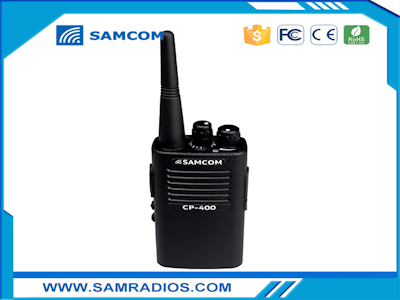
В современном мире, где глобализация и цифровая трансформация становятся все более важными, способность передавать информацию на большие расстояния становится критически важной. Новейшие технологии, такие как оптические волокна, спутниковая связь и квантовые сети, открывают новые горизонты для бизнеса, науки и повседневной жизни. В этой статье мы подробно рассмотрим эти инновации, их преимущества, вызовы и будущее развитие.
1. Введение в технологии дальних расстояний
Технологии для передачи данных на большие расстояния существуют уже давно, но в последние годы они претерпели значительные улучшения. Исторически, первые системы связи, такие как телеграф и телефон, позволяли передавать сигналы на сотни километров. Однако с появлением интернета и цифровых технологий потребности в скорости, надежности и емкости резко возросли. Сегодня новейшие технологии, включая 5G, оптоволокно и спутниковые системы, обеспечивают передачу данных на тысячи километров с минимальными задержками и высоким качеством.
Одним из ключевых драйверов этой революции является рост объемов данных. По оценкам, к 2025 году global data traffic достигнет 175 зеттабайт, что требует более эффективных решений для дальних расстояний. Кроме того, такие приложения, как удаленная работа, онлайн-образование и телемедицина, подчеркивают важность надежной связи. Новейшие технологии не только удовлетворяют эти потребности, но и открывают возможности для инноваций, таких как интернет вещей (IoT) и искусственный интеллект (AI).
В этой статье мы углубимся в основные категории технологий для дальних расстояний, обсудим их принципы работы, преимущества и ограничения, а также представим примеры из реальной жизни. Мы также рассмотрим будущие тенденции, такие как квантовая связь и гибридные сети, которые могут further revolutionize the field.
2. Оптические волокна: основа современной связи
Оптические волокна являются одним из самых важных изобретений в области связи на большие расстояния. Они используют свет для передачи данных через тонкие стеклянные или пластиковые волокна, что позволяет достигать чрезвычайно высоких скоростей и больших расстояний с минимальными потерями. Принцип работы основан на явлении полного внутреннего отражения, которое предотвращает рассеивание светового сигнала.
Преимущества оптических волокон включают высокую пропускную способность (до нескольких терабит в секунду), низкую задержку, immunity to electromagnetic interference, и долговечность. Например, подводные кабели, такие как MAREA, соединяющие Европу и Северную Америку, могут передавать данные на расстояния свыше 6,000 км с скоростью 160 Tbps. Это делает их идеальными для международной связи и поддержки глобального интернета.
Однако существуют и challenges, такие как высокая стоимость installation и maintenance, а также vulnerability to physical damage. To address these, researchers are developing new materials, such as hollow-core fibers, which reduce signal loss and increase capacity. Additionally, advancements in amplification technologies, like erbium-doped fiber amplifiers (EDFAs), have extended the reach of optical networks without the need for frequent repeaters.
In practical applications, optical fibers are used in various sectors. For instance, in telecommunications, they form the backbone of internet infrastructure, enabling services like streaming video and cloud computing. In scientific research, fibers are used in telescopes and sensors for long-distance monitoring. The future of optical technology may involve integration with other systems, such as free-space optical communication, for even greater flexibility.
3. Спутниковая связь: покрытие всего земного шара
Спутниковая связь offers a unique solution for long-distance communication by using satellites in orbit to relay signals between points on Earth. This technology is particularly valuable for remote areas where terrestrial infrastructure is lacking. The first communication satellites were launched in the 1960s, and since then, the technology has evolved significantly, with modern systems providing high-speed internet, television broadcasting, and navigation services.
The advantages of satellite communication include global coverage, independence from ground-based infrastructure, and the ability to serve mobile users, such as ships and aircraft. For example, companies like SpaceX's Starlink are deploying constellations of low Earth orbit (LEO) satellites to deliver broadband internet with latencies as low as 20ms, rivaling terrestrial options. This is revolutionizing access in rural and underserved regions.
Despite its benefits, satellite communication faces challenges such as high latency for geostationary satellites (due to the distance to orbit), signal attenuation from weather conditions, and high costs for launching and maintaining satellites. To mitigate these, advancements in satellite design, such as using higher frequency bands and inter-satellite links, are being pursued. Additionally, the development of reusable rockets has reduced launch costs, making satellite networks more affordable.
Real-world applications abound. In disaster response, satellites provide critical communication when terrestrial networks are down. In agriculture, they enable precision farming through remote sensing. The future may see increased integration with 5G networks and the emergence of mega-constellations, offering seamless global connectivity. However, concerns about space debris and regulatory issues need to be addressed to ensure sustainable development.
4. Беспроводные технологии: 5G и beyond
Беспроводные технологии, such as 5G, are transforming long-distance communication by enabling high-speed, low-latency connections without physical cables. 5G networks use advanced radio technologies, such as millimeter waves and massive MIMO, to achieve data rates up to 10 Gbps and support a massive number of connected devices. While traditionally focused on short-range communication, 5G is being extended to cover wider areas through technologies like network slicing and edge computing.
The benefits of wireless technologies include flexibility, scalability, and the ability to support mobile and IoT applications. For long distances, 5G can be combined with other technologies, such as fixed wireless access (FWA), to provide broadband in rural areas. For instance, in some regions, 5G towers are being used to deliver internet over distances of several kilometers, reducing the need for fiber deployment.
Challenges include limited range due to signal attenuation, especially at higher frequencies, and interference from obstacles. To overcome these, researchers are developing new antenna designs and using beamforming to focus signals. Additionally, the integration of AI helps optimize network performance and manage resources efficiently.
Applications are diverse: in smart cities, 5G enables real-time traffic management and public safety systems. In healthcare, it supports remote surgeries through ultra-reliable low-latency communication (URLLC). Looking ahead, technologies like 6G are expected to further enhance long-distance capabilities with terahertz frequencies and integrated satellite-terrestrial networks, paving the way for holographic communication and advanced AI services.
5. Квантовая связь: следующая frontier
Квантовая связь represents the cutting edge of long-distance technology, leveraging principles of quantum mechanics to achieve unprecedented security and efficiency. Quantum key distribution (QKD), for example, allows for secure communication by using quantum particles to encrypt keys, making it immune to eavesdropping. This technology is particularly promising for long-distance applications where data security is paramount, such as in government and financial sectors.
Advantages of quantum communication include ultra-high security, potential for faster-than-light information transfer in certain contexts (though practical limitations exist), and the ability to integrate with existing networks. Experiments have demonstrated QKD over distances of hundreds of kilometers, and projects like the Chinese Micius satellite have achieved intercontinental quantum communication.
However, significant challenges remain, such as the fragility of quantum states, which can be easily disturbed by environmental factors, and the high cost of equipment. Research is focused on developing quantum repeaters to extend range and improving photon sources for better reliability. Hybrid systems that combine quantum and classical communication are also being explored to make the technology more practical.
In the future, quantum networks could enable secure global communication and support quantum computing applications. For instance, a quantum internet would allow for distributed quantum processing, revolutionizing fields like cryptography and simulation. While still in early stages, the rapid progress suggests that quantum communication will play a key role in the next decade's long-distance technologies.
6. Гибридные системы и будущие тенденции
Гибридные системы, which combine multiple technologies like fiber, satellite, and wireless, are becoming increasingly important for robust long-distance communication. By leveraging the strengths of each technology, hybrid systems can provide redundancy, improve coverage, and optimize performance. For example, a network might use fiber for high-capacity backbone links and satellite for last-mile connectivity in remote areas.
The benefits include enhanced reliability, as failures in one component can be mitigated by others, and cost efficiency, by using the most appropriate technology for each scenario. Trends such as software-defined networking (SDN) and network function virtualization (NFV) are making it easier to manage hybrid systems dynamically.
Challenges involve interoperability between different technologies and the complexity of integration. Standards development and collaboration between industries are crucial to address these issues. Additionally, the rise of edge computing is reducing latency by processing data closer to the source, complementing long-distance technologies.
Future trends point towards even more integrated and intelligent networks. The adoption of AI and machine learning will enable predictive maintenance and self-healing networks. Emerging technologies like terahertz communication and nanotechnology could further push the boundaries of distance and speed. Ultimately, the goal is to create a seamless, global communication infrastructure that supports the ever-growing demands of society.
7. Заключение: значение и перспективы
В заключение, новейшие технологии для дальних расстояний, такие как оптические волокна, спутниковая связь, беспроводные системы и квантовая коммуникация, fundamentally transform how we connect across the globe. They enable economic growth, social inclusion, and scientific advancement by breaking down geographical barriers. The ongoing innovations in these fields promise even greater capabilities, from faster internet speeds to unbreakable security.
As we look to the future, it is essential to address challenges like cost, sustainability, and regulation. Collaboration between governments, industries, and researchers will be key to harnessing the full potential of these technologies. By investing in infrastructure and fostering innovation, we can build a connected world where distance is no longer a limitation.
In summary, the revolution in long-distance technology is just beginning. With continuous advancements, we can expect a future where communication is instantaneous, secure, and accessible to all, driving progress in every aspect of human life.
Предыдущая страница: Радиосвязь нового поколения для эффективной командной работы
Следующая страница: Портативная система реально ли заменить стационарный компьютер